
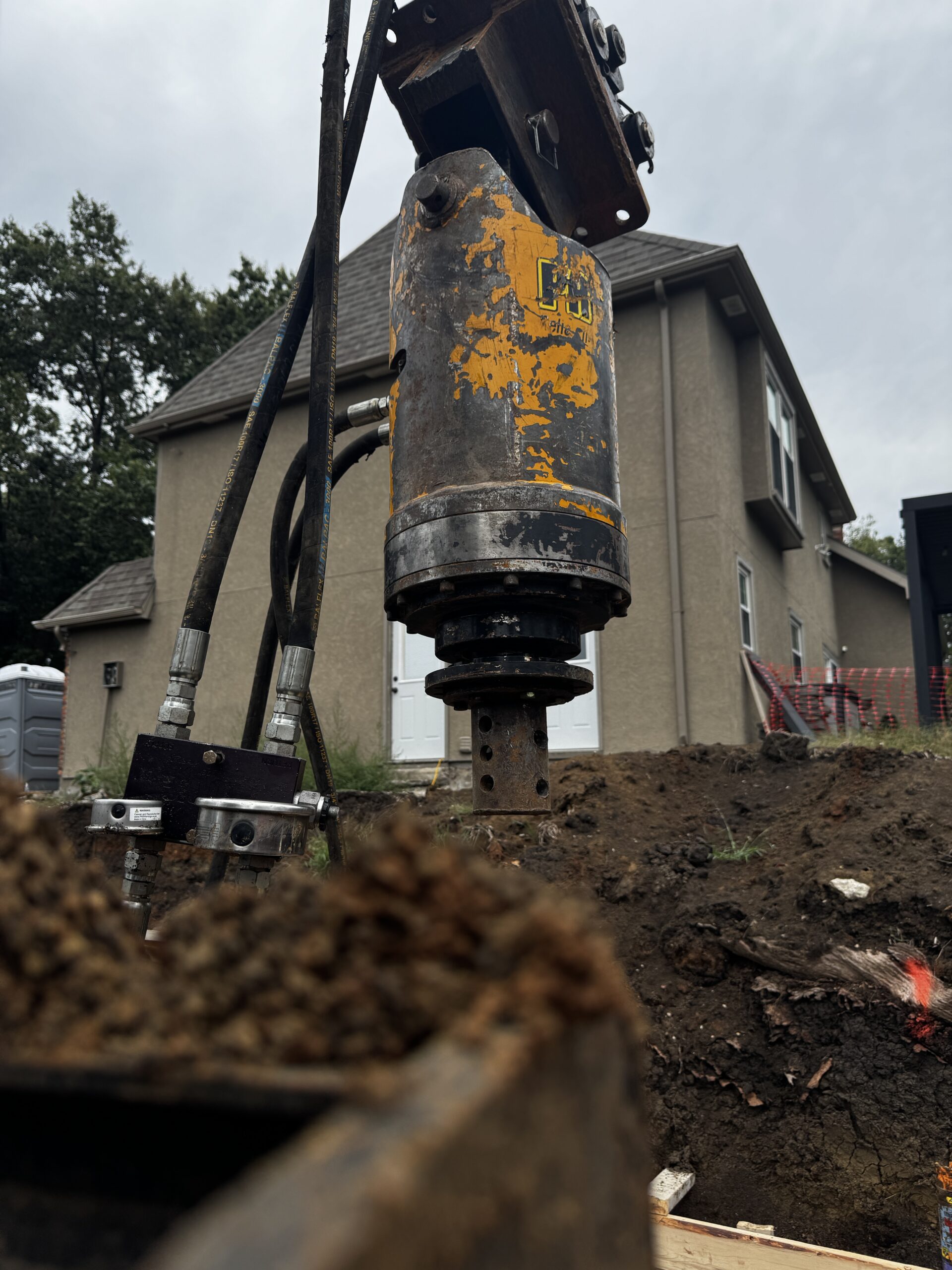
Trusted New Construction Helical Pier Experts
Olympic Foundation Repair provides new construction helical pier installation throughout the Kansas City area and beyond! We work with builders, property owners, and project engineers to install deep foundation support suited to the structure, soil conditions, and construction plans.
Understanding New Construction Helical Piers
Helical piers, also called helical piles, are steel shafts fitted with spiral-shaped bearing plates. They are rotated into the ground to reach soil capable of supporting the proposed structure.
In new construction, the piers are installed as part of the foundation system. Engineered caps or connections tie the piers into footings, grade beams, or other structural components, allowing building loads to transfer to deeper supporting material.
This approach can help reduce reliance on shallow soil that may compress or move under the weight of a new building.
Why Soil Conditions Matter Before You Build
A new foundation must support the structure above it, but its performance also depends on the material below it.
Fill soil, soft ground, and expansive soil can create challenges for conventional shallow foundations. Conditions may also vary across a single building site, causing different portions of the foundation to respond differently to loading.
Helical piers may be recommended when deeper support is needed. The appropriate foundation system should be determined using the proposed building loads, available soil information, and project engineering requirements.
When Should You Consider Helical Piers?
Helical piers should be considered during foundation planning, while the design and construction sequence can still accommodate the required support.
A project may benefit from a helical pier evaluation when:
Soil information identifies weak or compressible layers.
The building site contains fill or variable ground conditions.
The proposed foundation requires support below active soil layers.
Site access limits the use of larger foundation equipment.
The project engineer specifies a deep foundation system.
A new addition requires support suited to its own loads and soil conditions.
Early coordination helps establish the installation scope, connection details, and schedule before foundation concrete is placed.
Understanding New Construction Helical Pier Solutions
The pier system should be selected around the project’s structural requirements and ground conditions. Pier size, bearing plate configuration, spacing, and installation criteria all contribute to the finished foundation’s performance.
Deep Foundation Support
Helical piers transfer structural loads through weaker soil layers to suitable bearing material below.
Engineered Foundation Connections
New construction caps and other specified connections integrate the piers with the foundation so loads can transfer into the support system.
Efficient Installation
Helical piers are installed using hydraulic rotation. Appropriate equipment can provide access on sites where working space is limited.
Limited Soil Disturbance
Compared with some drilled foundation methods, helical installation generally produces little excavated spoil and limited vibration.
Documented Installation
Installation depth and torque readings provide information used to evaluate whether the piers meet the project’s specified acceptance criteria.
How New Construction Helical Piers Work
Installation begins with a lead section containing the helical bearing plates. Hydraulic equipment rotates the pier into the ground, and extension sections are added as needed.
The installer monitors depth and installation torque as the pier advances. Work continues until the specified installation criteria are satisfied, subject to the selected system’s limits.
Once installed, the pier is fitted with the required cap or connection. The foundation contractor incorporates that connection into the structural foundation according to the approved plans.
The completed system creates a load path from the building, through its foundation and pier connections, to suitable supporting soil.
Where Can New Construction Helical Piers Be Used?
Helical pier systems can be designed for a range of residential and commercial applications, including:
New home foundations.
Building additions.
Commercial building foundations.
Grade beams and column supports.
Porches, decks, and other engineered structures.
Selected equipment foundations.
Suitability depends on the loads, soil profile, access, and connection requirements. Each application needs a foundation design appropriate to the structure it will support.
Our New Construction Helical Pier Process
Olympic Foundation Repair coordinates installation with the project team and documents important installation information. Required inspections or load testing are addressed according to the project’s engineering requirements.
1. Project and Site Review
We inspect the crack’s location, direction, width, and visible condition. We also look for moisture, wall movement, settlement, and other signs that may be connected to the damage.
2. Engineering Coordination and Installation Plan
We coordinate with the builder and project engineer to confirm the specified pier system, layout, installation criteria, and foundation connections.
3. Site Preparation and Layout
Pier locations are established, utilities and access requirements are reviewed, and the installation area is prepared around the construction sequence.
4. Helical Pier Installation
The piers are rotated into the ground, with extensions added as needed. Installation depth and torque are monitored and recorded against the project requirements.
5. Foundation Connections and Final Review
The specified caps or connections are installed, installation records are reviewed, and the completed work is coordinated with the next stage of foundation construction.
Frequently Asked Questions
What are new construction helical piers?
They are steel deep foundation supports installed for a proposed structure. Helical bearing plates engage suitable soil, while engineered connections transfer loads from the new foundation into the piers.
Are helical piers only used for foundation repair?
No. Helical piers can support new construction as well as existing structures. New construction installations use connection details designed to integrate with the proposed foundation.
Does every new building need helical piers?
No. Many projects can use conventional shallow foundations. Soil conditions, building loads, and the project engineer’s recommendations determine whether deep support is appropriate.
How deep do helical piers need to go?
There is no standard depth for every project. Installation must satisfy the specified depth, torque, and other acceptance requirements while reaching suitable bearing material.
How many piers will my project need?
The number and spacing depend on the foundation layout, structural loads, soil conditions, and capacity of the selected pier system. These requirements are established through project-specific design.
Can construction continue immediately after installation?
Standard steel helical piers do not require concrete curing within the pier itself. The next construction stage still depends on completed connections, required inspections, and curing requirements for any associated concrete.
How much do new construction helical piers cost?
Pricing depends on the pier system, quantity, installation depth, site access, connection details, testing requirements, and overall scope. Reviewing the plans and site conditions allows us to prepare a project-specific estimate.
When should I contact Olympic Foundation Repair?
Contact us during foundation planning or as soon as helical piers are specified. Early involvement helps coordinate pricing, access, installation, and the foundation construction schedule.