
Trusted Basement Waterproofing Experts
Water entering your basement can damage flooring, walls, stored belongings, and other parts of your home. Olympic Foundation Repair provides trusted basement waterproofing solutions designed to control moisture, manage water pressure, and help keep your basement dry for the long term.
Understanding Basement Water Problems
Basement water problems can range from occasional dampness after heavy rain to ongoing leaks, standing water, and excessive humidity. Because water can enter through several different areas, identifying the source is an important first step toward choosing an effective waterproofing solution.
Water intrusion rarely resolves on its own and may become more frequent as drainage conditions, foundation cracks, or pressure around the home worsen. Addressing the problem early can help protect interior finishes, stored belongings, and the condition of the basement.
Common signs that basement waterproofing may be needed include:
- Water along the basement walls or floor
- Damp or discolored foundation walls
- Water entering through wall cracks
- Moisture where the floor meets the wall
- Musty odors or high basement humidity
- White, chalky residue on concrete surfaces
Why Water Enters the Basement
Water often enters a basement because it is collecting around or beneath the foundation. Poor grading, clogged gutters, damaged downspouts, or downspouts that discharge too close to the home can allow water to saturate the surrounding soil.
Foundation cracks can also create direct openings for moisture. When the soil becomes heavily saturated, hydrostatic pressure can push water through cracks, joints, porous concrete, and the area where the basement floor meets the foundation wall.
When Should Basement Waterproofing Be Addressed?
Basement waterproofing should be considered as soon as recurring moisture, leaks, or standing water are noticed. Even when the amount of water appears minor, repeated intrusion can damage finished surfaces and make the basement less comfortable or usable.
A professional assessment can help determine whether the problem is caused by exterior drainage, wall cracks, pressure beneath the basement floor, or a combination of conditions. The solution should be designed around the source of the water rather than simply covering the visible damage.
Understanding Basement Water Problems and Waterproofing Options
Basement water can enter through several different parts of the foundation, so the right waterproofing method depends on where the moisture is coming from. Olympic Foundation Repair evaluates the basement, foundation, and surrounding drainage conditions before recommending a solution.
Poor Exterior Drainage
Improper grading, clogged downspouts, and water discharging too close to the foundation can allow the surrounding soil to become saturated. Drainage improvements may be recommended to help move water away from the home.
Foundation Wall Cracks
Cracks caused by concrete shrinkage, settlement, or outside pressure can provide a path for water to enter the basement. Depending on the crack, professional wall crack repair or exterior waterproofing may be appropriate.
Hydrostatic Pressure
When water builds up in the soil around or beneath the foundation, pressure can force moisture through joints, cracks, and the connection between the basement floor and wall.
Interior Waterproofing Systems
Interior drain-tile systems collect water beneath and around the basement floor and direct it toward a sump pump. A wall shield or vapor barrier may also be installed to guide wall moisture into the drainage system.
Exterior Waterproofing Systems
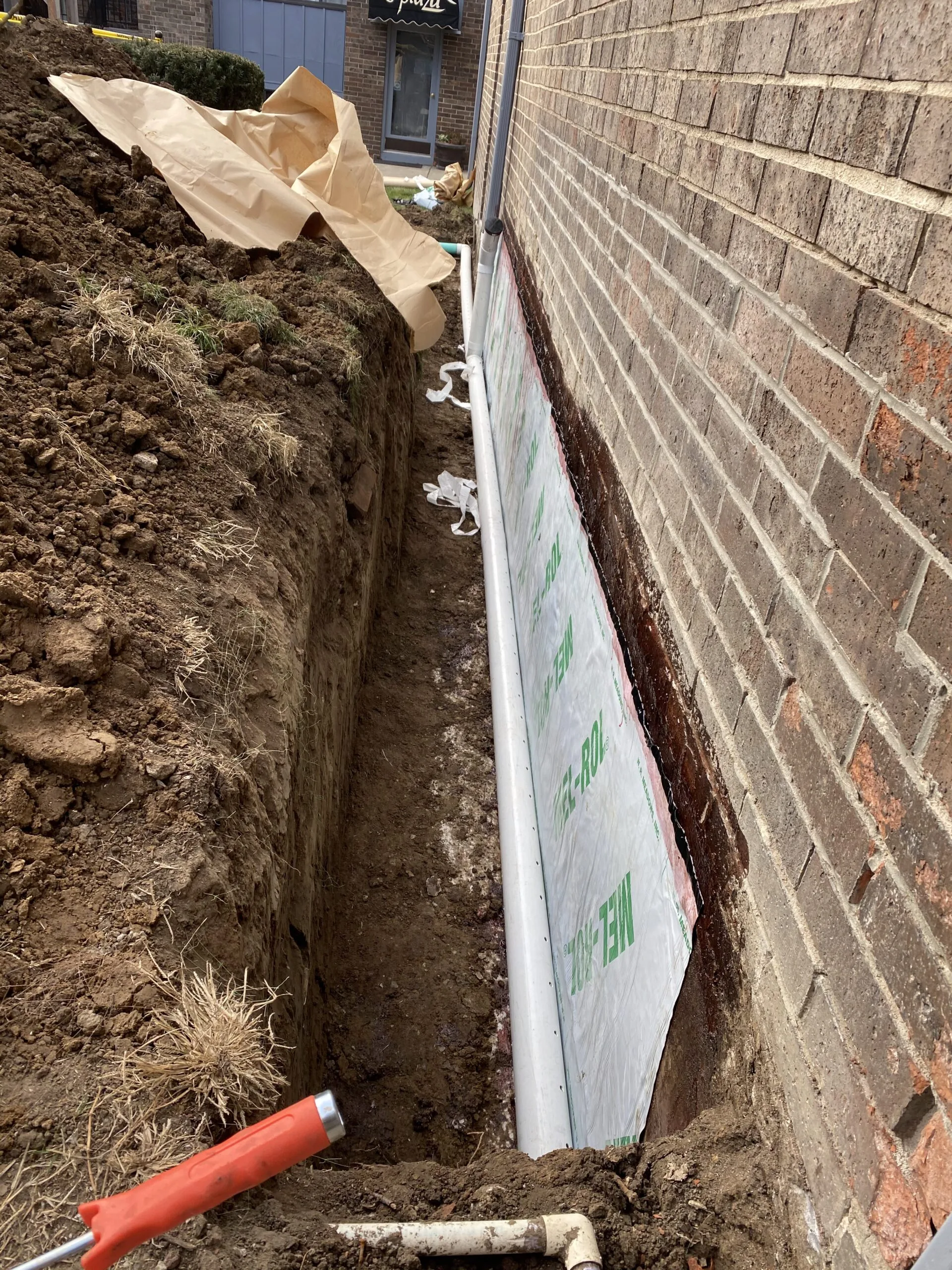
Exterior waterproofing involves accessing the outside of the affected foundation wall, applying a waterproof barrier, and improving drainage near the base of the foundation to help stop water before it enters.
Interior Drain-Tile and Wall Protection Systems
An interior waterproofing system is designed to manage water that collects around or beneath the basement floor. A trench is created along the base of the foundation wall, and a perforated drainage pipe is installed to collect water and direct it to a sump pump.
A wall shield or vapor barrier may also be added to capture moisture entering through the wall and guide it into the drainage system. Once the system is installed, the trench is filled with gravel and the concrete surface is restored. Because the work is completed from inside the basement, exterior landscaping and hardscaping generally remain undisturbed.
Exterior Basement Waterproofing
Exterior waterproofing is intended to help stop water before it passes through the foundation wall. The affected area is excavated so the exterior surface can be exposed, prepared, and covered with a waterproof membrane.
A drainage pipe may also be installed near the base of the wall to collect water and direct it toward an appropriate discharge point or sump system. The excavated area is then backfilled in a way that helps improve drainage and reduce water pressure against the foundation.
Addressing the Source of Basement Moisture
A lasting waterproofing solution should address both where the water is entering and why it is collecting around the foundation. Sealing one visible crack may stop a specific leak, but it may not correct poor grading, clogged downspouts, or pressure beneath the basement floor.
Olympic Foundation Repair considers the entire water-management system around the home. Depending on the findings, the recommended plan may include crack repair, interior drainage, exterior waterproofing, a sump pump, or improvements to the property’s drainage system.
Our Basement Waterproofing Process
Every basement waterproofing project begins with identifying where the water is entering and what conditions are contributing to the problem. Our team then develops a solution designed around the home rather than applying the same system to every basement.
1. Basement and Foundation Assessment
We assess the basement for visible leaks, damp walls, foundation cracks, standing water, and moisture where the floor meets the wall. Exterior grading, downspouts, and surrounding drainage conditions are also reviewed.
2. Water Source Evaluation
Our team identifies the likely paths of water intrusion and determines whether the problem is related to wall cracks, exterior drainage, hydrostatic pressure, or multiple conditions.
3. Customized Waterproofing Plan
We recommend an interior system, exterior system, crack repair, drainage improvement, or combination of solutions based on the source and severity of the moisture problem.
4. Professional System Installation
The selected waterproofing components are installed and connected so collected water can be properly controlled and redirected away from the basement.
5. Final Review and Warranty
The completed system is reviewed, and the work area is cleaned or restored. The homeowner receives information about the installation, system operation, maintenance, and applicable warranty coverage.
Frequently Asked Questions
How much does basement waterproofing cost?
The cost depends on where the water is entering, the size of the affected area, accessibility, and the type of system required. An on-site assessment is needed to determine the appropriate repair scope and provide accurate pricing. Qualified homeowners may also explore available financing options.
Do I need interior or exterior basement waterproofing?
That depends on the source of the water and the condition of the foundation. Some homes benefit from an interior drainage system, while others need exterior waterproofing, crack repair, drainage improvements, or a combination of solutions.
What are the most common signs of a basement water problem?
Common signs include visible leaks, damp walls, water along the floor, musty odors, high humidity, white residue on concrete, peeling finishes, and moisture entering through foundation cracks or floor joints.
Will basement waterproofing stop all water from entering?
A properly designed system can effectively control the identified sources of water intrusion. However, the waterproofing plan must account for foundation cracks, drainage conditions, water pressure, and the areas where moisture is entering.
Does every wet basement need a sump pump?
Not necessarily. A sump pump is commonly used with an interior drainage system to remove collected water, but the correct solution depends on the source and amount of water affecting the basement.
Will basement waterproofing disrupt my home?
Interior systems require work along the affected basement walls but generally avoid disturbing exterior landscaping. Exterior waterproofing requires excavation outside the home but may avoid disruption to finished basement surfaces.
Can a finished basement still be waterproofed?
Yes, but some finishes may need to be temporarily removed to access the foundation wall or floor perimeter. The amount of disruption depends on the waterproofing method and the location of the water intrusion.
Is basement waterproofing covered by a warranty?
Warranty coverage depends on the system installed and the scope of the project. Olympic Foundation Repair offers long-term and lifetime warranty options for qualifying waterproofing solutions.